

Repainting a second-hand piece of furniture, applying adhesive wall covering, installing a shelf made from pallet wood: these low-budget decorating projects expose indoor air to volatile organic compounds (VOCs), whose impact is rarely discussed in decorating guides.
France’s A+ to C label, which is mandatory for paints, adhesives and wall coverings, does not cover furniture or the overall air quality in your home. Decorating without breaking the bank therefore means considering two factors together: the true cost of the project and the emissions it generates in the first few weeks.
VOCs and budget decorating: hidden risks when painting or gluing things yourself
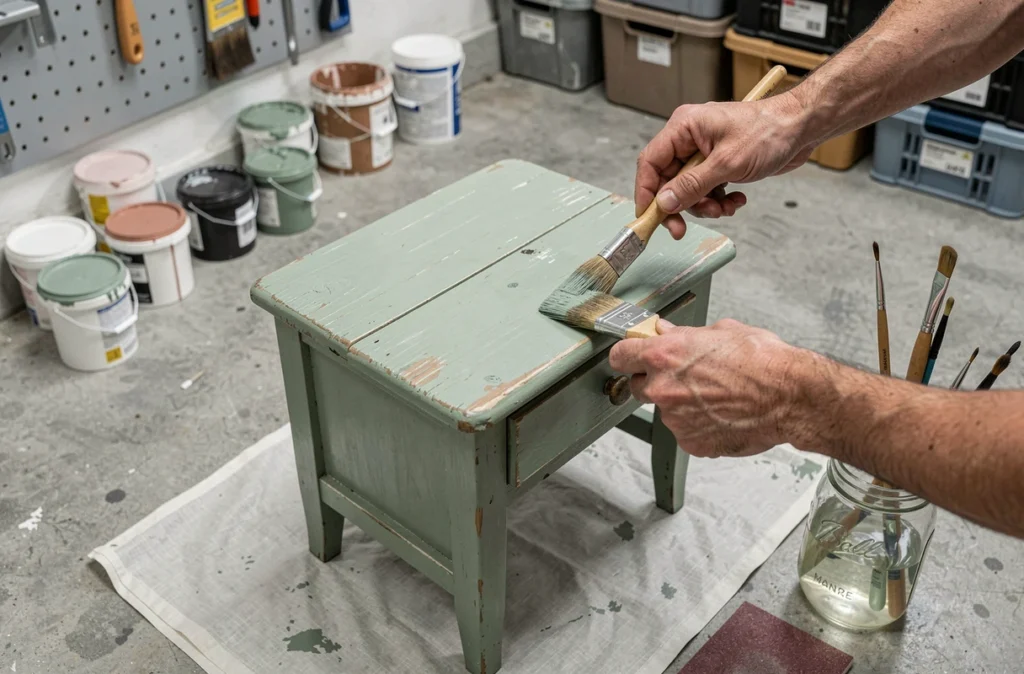
An A+-rated paint releases less formaldehyde than a B-rated product, but the label says nothing about residual solvents once the paint has dried. Adhesives used to apply peel-and-stick wallpaper or assemble flat-pack furniture also release VOCs, sometimes for several weeks.
Second-hand furniture presents a different problem. A piece made from particleboard ten years ago will have already released most of its emissions, but sanding or stripping it can send particles and resins back into the air. The rule to follow: sand outdoors or in a mechanically ventilated room, never in a closed living room.
- Air out the room for at least 15 minutes in the morning and evening for two weeks after applying any paint, varnish or adhesive, even if it is A+-rated.
- Choose water-based or bio-based paints, which have inherently lower VOC content than oil-based formulations.
- Avoid overlapping projects (painting + flooring + gluing) in the same room during the same week: emissions add up.
Creative projects featured in the decorating section of Les Bricoleries de Nanie show that you can transform a home using low-emission techniques, focusing on sewing, repurposing objects or plant-based dyes rather than painting everything.
Furniture reuse: reuse centers, the AGEC law and the true cost
Most decorating articles recommend browsing second-hand marketplaces. It’s good advice, but it overlooks another network that is often even more affordable: reuse centers and social and solidarity economy organizations. According to ADEME data published in 2023, these channels are handling an increasing share of France’s reuse stream.
The AGEC law of February 10, 2020 (Article 62) established funds dedicated to reuse and repurposing in several extended producer responsibility sectors. In practice, this means local organizations receive funding to collect, restore and resell furniture at very low prices. Furniture reuse is still less established than second-hand shopping in general, leaving stock underused in these channels.
The true cost of a second-hand piece of furniture goes beyond its purchase price. You also need to factor in transport, replacement hardware (handles, hinges) and, potentially, paint or finishing varnish. For a free sideboard, we estimate a finishing budget ranging from the cost of a tin of bio-based paint to that of a complete handles-and-varnish kit—still far less than a new budget-range piece.
Where to look beyond the usual platforms
Emmaüs, municipal recycling centers and work-integration organizations offer furniture at prices that are often lower than those charged by private sellers. Some departments publish a directory of approved reuse centers, available through the ADEME website.
Neighborhood bulky-waste collections are an overlooked source. A solid-wood occasional table left on the sidewalk may need nothing more than a quick sanding and a coat of wax to become a side table.
Low-cost paint and finishes: choose the right products to decorate without polluting
Bio-based paints (made with casein, clay or lime) cost about the same per liter as mid-range acrylic paints. They may require an extra coat for good coverage, but their VOC levels are often ten times lower than those of oil-based paints.
Limewash, which can be used on interior walls and unfinished wooden furniture, costs less than branded paint. It creates a matte, textured finish that conceals surface imperfections—an important advantage when working with reclaimed furniture.
Alternatives to paint for personalizing your home
Fabric is the lowest-emission decorating option. Changing cushion covers, adding a sofa throw or hanging a plant-dyed linen curtain can transform a room without releasing any chemicals. Textiles are the only decorating choice with zero VOCs and a manageable cost.
- Homemade plant dyes (onion skins, coffee grounds, turmeric) to recolor reclaimed light-colored fabrics.
- Stencils cut from sturdy cardboard to print a pattern on a wall using clay paint.
- Removable washi tape to create graphic frames without drilling or gluing.
Color palette and cohesive style: cut down on purchases by planning your choices
The biggest budget mistake in decorating isn’t choosing expensive products—it’s buying too many different colors and materials. A maximum of three shades per room is enough to create a cohesive look and helps avoid corrective purchases (like a cushion bought to “tie together” two clashing colors).
Start with an object you already own (a rug, a painting, a ceramic piece) and use it to build your color palette. Free color charts available at home improvement stores let you check that colors work together before buying a single tin of paint.
Focusing your budget on a single focal point in each room makes a stronger visual impact than scattering small decorative objects everywhere. An accent wall painted with clay paint, a restored second-hand light fixture or an antique mirror is enough to anchor the style of a living room or bedroom.
Personalizing your home on a small budget is less about collecting decorating hacks than following a method: choose low-emission materials, source furniture through reuse channels rather than relying solely on mainstream marketplaces, and limit your palette to avoid corrective spending. The result depends as much on what you don’t do as on what you buy.