
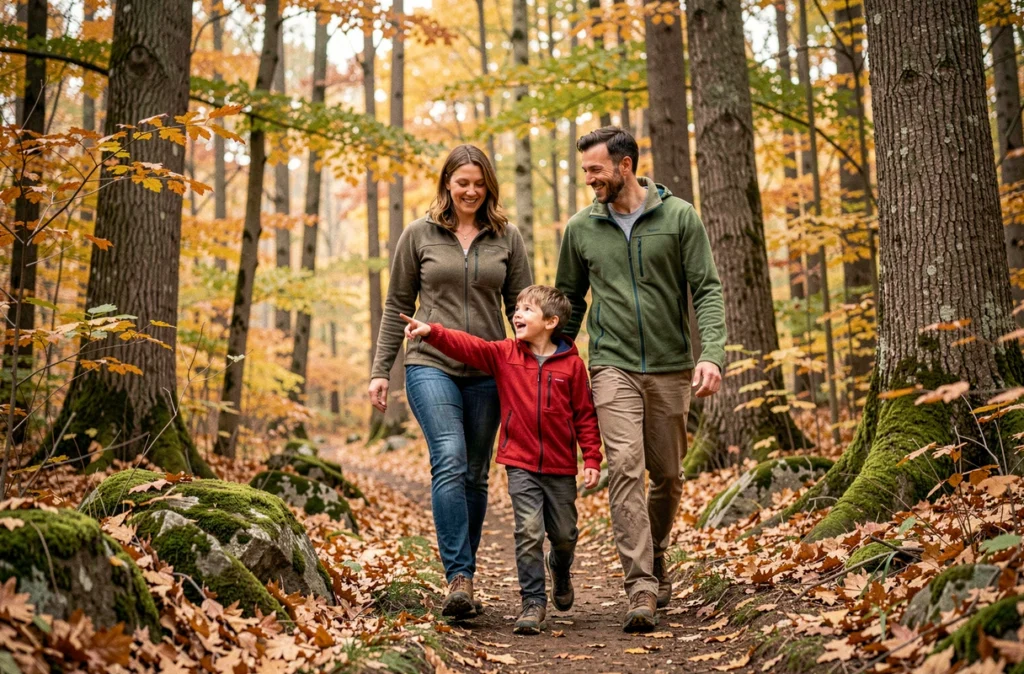
Taking children outdoors requires neither a special budget nor technical equipment. A patch of woodland, an urban park or even a garden is enough to make outdoor activities a regular family outing. The goal isn’t to cover miles, but to slow down, observe and let the children’s curiosity guide the way.
Set a pace for nature outings that works for children
Have you ever noticed that a child can spend ten minutes crouched in front of an anthill without getting bored? That ability to focus on a detail in nature is an asset, not a drawback. Building a family outing around this slower pace changes everything.
Instead of setting a distance goal, choose a small area to explore. A short trail explored thoroughly is better than a long hike that feels like a chore. Children remember more when they have time to touch tree bark, turn over a stone or follow an insect with their eyes.
For ideas for outings suited to this pace, resources such as loisirs-verts.fr bring together nature activities designed for families, organised by environment and age group.
In practice, plan two or three “stops” along your route: a striking tree, a water source, a patch of earth. Each stop becomes a mini-adventure. The children explore while the adults take a breather.
Nature activities in the forest: observe rather than walk
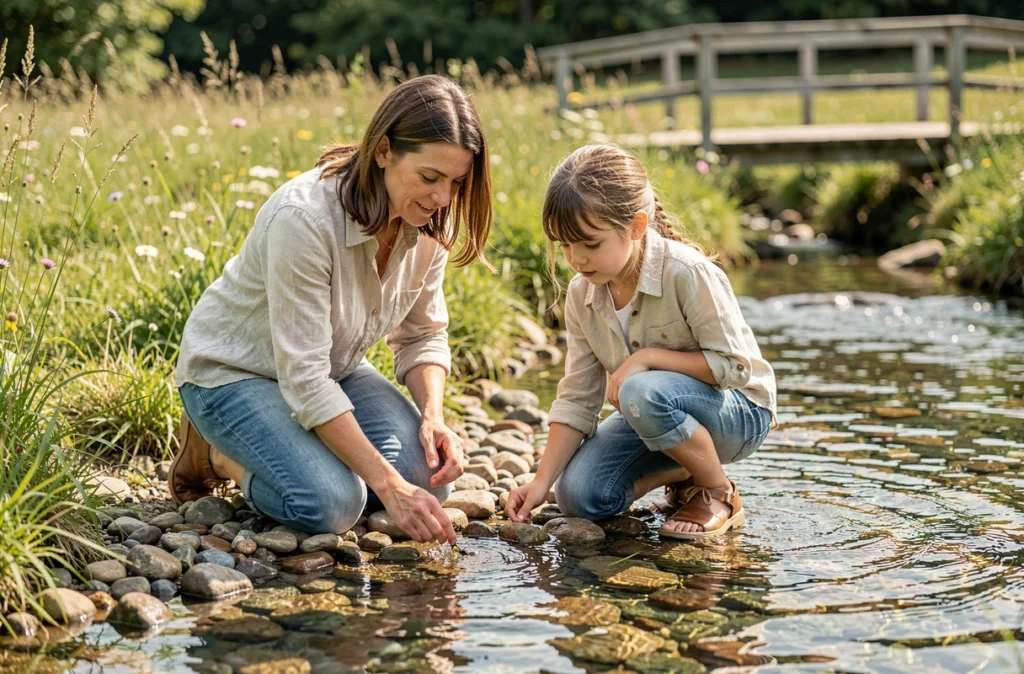
The forest remains the richest playground for families. Before you go, there’s one important point to keep in mind: access to some forest areas is restricted during periods of drought. In Hérault, for example, a prefectural order sets fire-risk alert levels ranging from discouraged access to a total ban, depending on the area and the day. Check local guidance and have a backup route in mind.
Once you’re there, here are three activities that work for all ages:
- Adopt a tree: choose a tree together, photograph it each season and note the changes. Children build a tangible connection with nature and learn to observe natural cycles over time.
- Track animals: look for footprints in the mud, feathers on the ground or claw marks on tree trunks. You don’t need a guide—a simple notebook is enough to sketch what you find and look up the animal’s name at home.
- Listen to the birds at dusk: stay still for five minutes as the sun sets. The birdsong follows a particular sequence. Counting the different calls you hear turns it into a game.
None of these activities requires specialised equipment. A phone for photos, a pencil and some paper cover most needs.
Why seasonal rhythms matter
The forest changes dramatically from one month to the next. Returning to the same spot in autumn and then in spring lets children see the changes for themselves: mushrooms, fallen leaves, buds and different insects. Revisiting the same place helps them feel familiar with their surroundings and nurtures their curiosity far more than a succession of new locations.
Outdoor activities in the city: nature is right there on the pavement
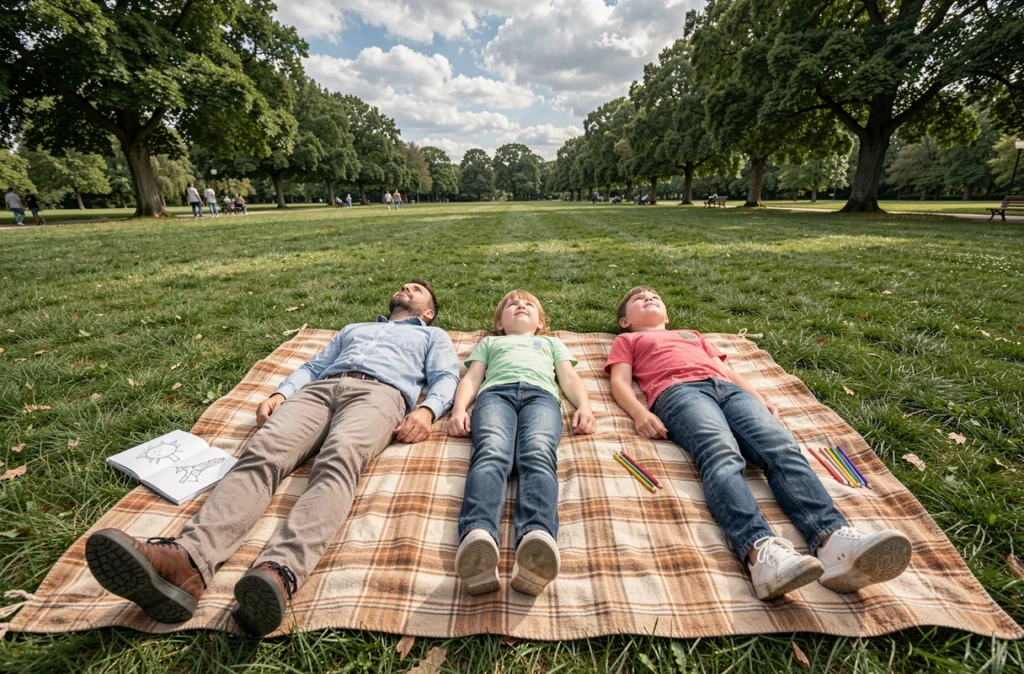
No forest nearby? That’s no obstacle. You can discover nature in urban areas too, and not just in parks. In Paris, the Maison Paris Nature offers workshops and activities focused on urban biodiversity throughout the year, along with a library of resources for families.
A community garden, a greened-over vacant lot or even a simple row of trees offers plenty to explore. Children who learn to identify three plants on the way to school start seeing their neighbourhood differently.
Grow something, however small
Growing herbs on a balcony or radishes in a planter gives children first-hand experience of a plant’s life cycle. They can see the results within a few weeks. They water, observe and harvest.
This activity works from March to October in most parts of France. All you need is potting soil, seeds and a container with drainage holes. Herbs such as basil and chives grow quickly and reward children in no time.
Think about outdoor play spaces from a child’s perspective
A 2024 article published by The Conversation explores playground design and highlights the value of taking children’s perspectives into account. Adults think about safety and aesthetics. Children think about hiding places, textures and opportunities to climb.
Applying this approach to your nature outings can make all the difference. Before choosing a place, ask the children what they want to do outdoors. Climb, dig, splash around? Starting with what they want to do keeps them engaged throughout the outing.
A patch of earth is often better than a slide. A shallow stream is more captivating than a mown lawn. Untamed natural environments offer a freedom to play that standardised play structures can’t provide.
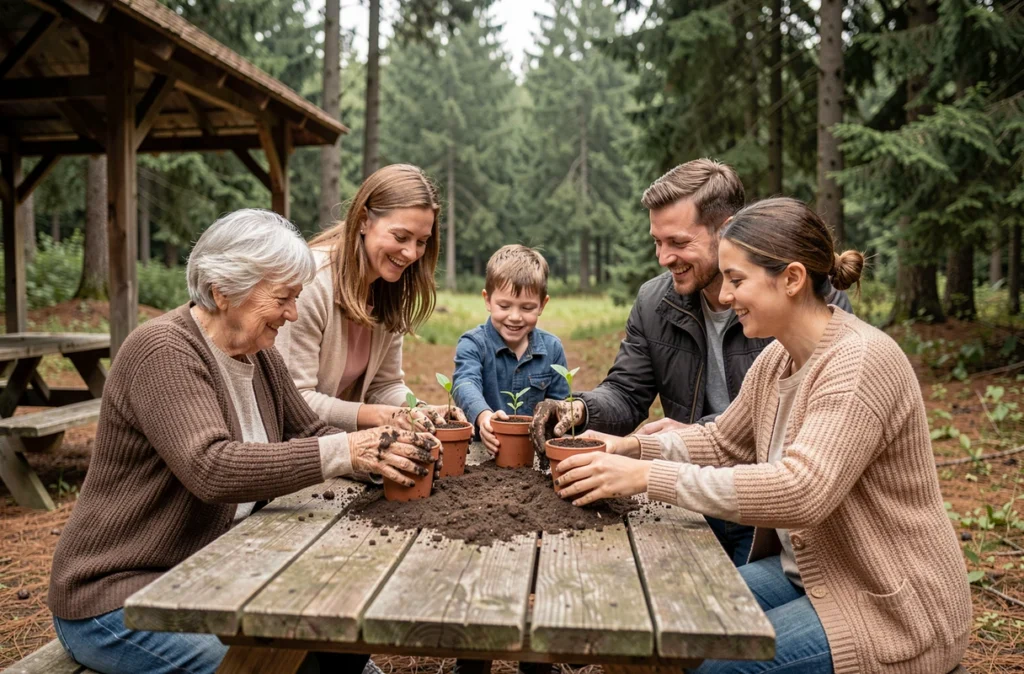
Family outdoor activities aren’t just for holidays or wide-open spaces. An attentively explored neighbourhood park, a balcony planted with chives or a forest walk without a stopwatch all serve the same purpose: helping children enjoy the outdoors, where everything moves, grows and changes. Regular outings matter more than the destination.