
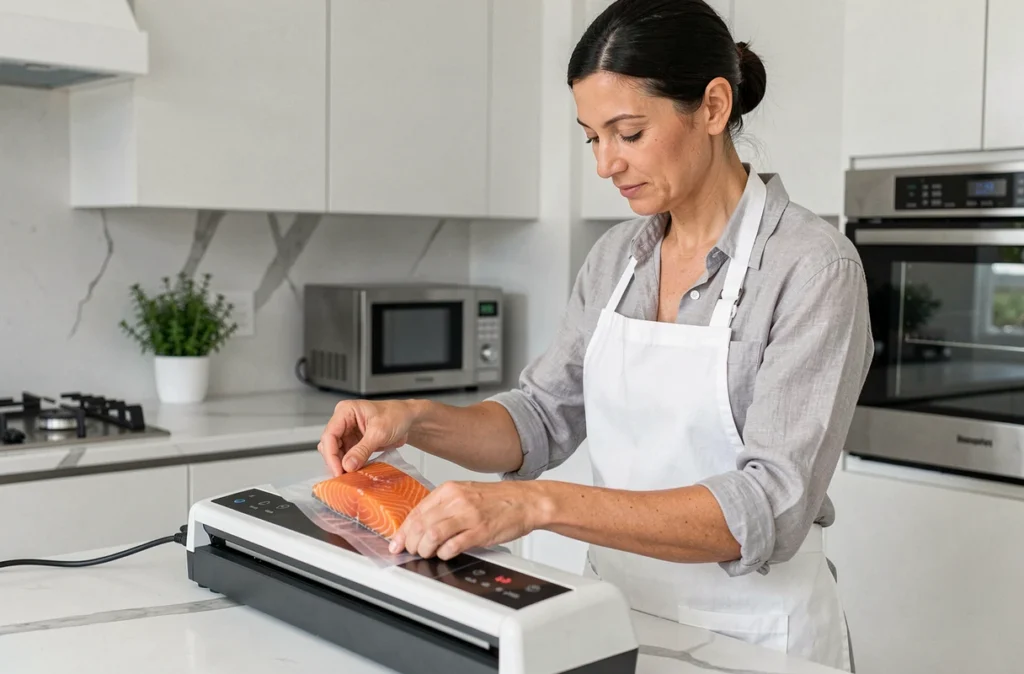
A vacuum sealer removes air from a bag and seals it. It does not sterilize food or destroy bacteria or spores. Confusing vacuum sealing with sterilization poses a genuine health risk. Choosing a machine depends less on its raw power than on how well it fits into a consistent food preservation process, where refrigeration remains the most important link.
Vacuum sealing and food safety: what the machine doesn’t do
Vacuum sealing does not replace refrigeration or sterilization. Removing oxygen slows oxidation and the growth of some aerobic bacteria, but anaerobic bacteria (including Clostridium botulinum) thrive precisely in the absence of air. A perishable food vacuum-sealed and left at room temperature creates an environment conducive to botulism.
In practical terms, a home vacuum sealer is used to portion food and prepare it for freezing or refrigeration. The three- to fivefold increase in refrigerator shelf life often cited by manufacturers assumes that the cold chain is never broken.
For cooked leftovers, when you package them matters just as much as the machine you use. They must be cooled quickly before vacuum sealing. The cooking date or original opening date remains the reference point: vacuum sealing does not reset the clock. A dish cooked three days ago and vacuum-sealed on the fourth day does not gain three extra days.
We recommend always writing the preparation date on each bag, regardless of the model you use. More information about usage requirements for different types of machines is available at https://www.machine-sous-vide.xyz.
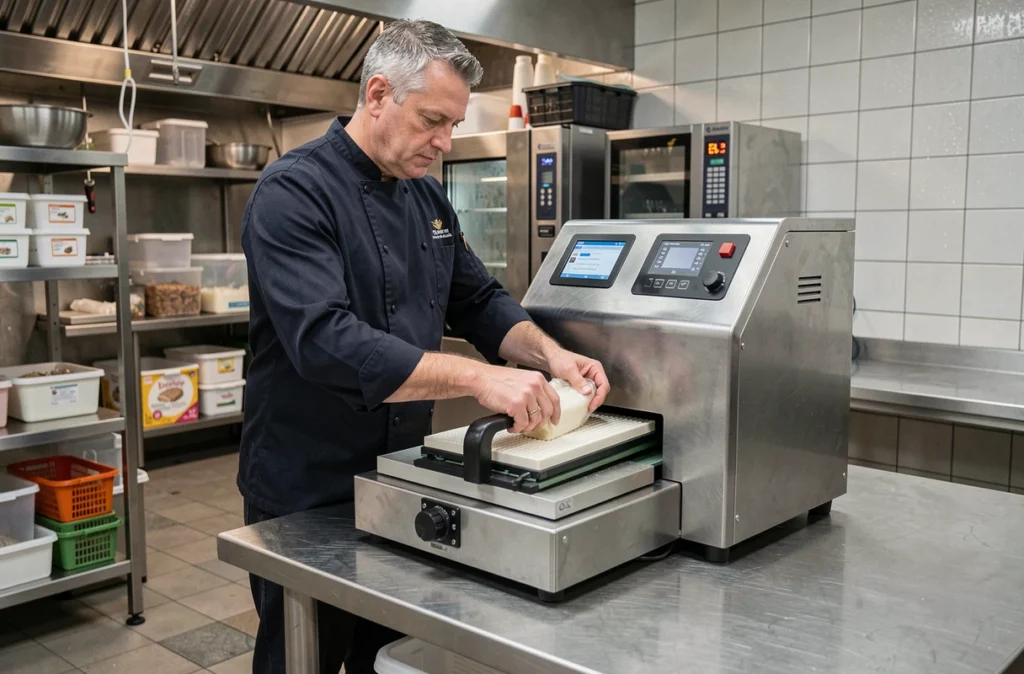
External suction or chamber vacuum sealer: choose based on the food
The difference between external suction and chamber machines is about more than budget or capacity. First and foremost, it comes down to whether the machine is compatible with the foods you package.
External suction and dry foods
External suction models draw air out through the opening of the bag. They work well with dry or solid foods (raw meat, hard cheese, dried vegetables). With moist foods, liquids or sauces, suction can draw liquid into the pump before the seal is made.
Some machines offer a moist mode that slows the suction rate. This helps limit the problem but does not eliminate it. Pre-freezing the food before packaging remains the most reliable method with this type of machine.
Chamber vacuum sealers and versatility
A chamber vacuum sealer places the entire bag inside a sealed chamber. Air is removed from the chamber, not the bag, preventing liquids from being drawn into the pump. This is the right format for marinades, soups, sauces and preparations for low-temperature sous vide cooking.
Its size and price make it better suited to professional kitchens or very frequent home users. The investment makes sense if sous vide cooking or packaging liquids is part of your regular routine.
- External suction: suitable for dry foods, portioning before freezing and occasional use. Compact and affordable.
- Chamber vacuum sealer: suitable for liquids, marinades and low-temperature cooking. Bulky and significantly more expensive.
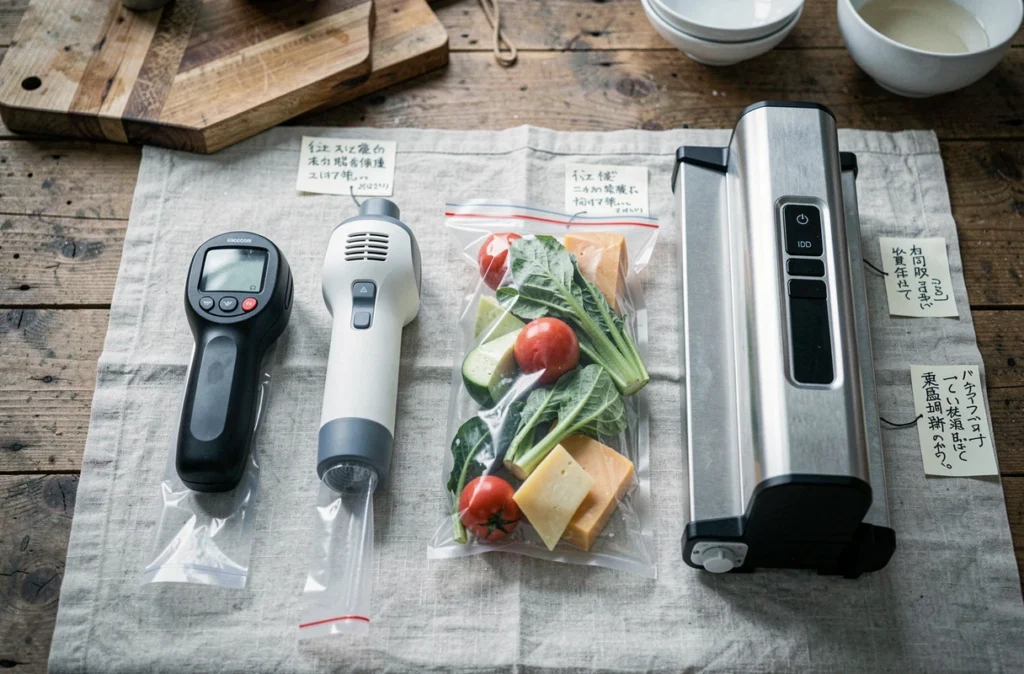
- Portable valve sealers: limited to compatible rigid containers. They do not seal bags, so they are not suitable for long-term storage.
Vacuum sealer bags: just as important a buying consideration as the machine
A bag that is not intended for food contact or for the intended use (freezing, cooking, microwave use) can compromise food preservation, regardless of the machine. You cannot tell whether a bag is food-safe just by looking at it.
Check two things before buying:
The bag must be explicitly labeled as suitable for food contact. Without this marking, there is no guarantee that substances will not migrate into the food, especially when heated.
The intended use must match the bag’s specifications. A bag designed for refrigerator storage is not necessarily suitable for freezing or immersion in hot water. Bags labeled “cooking” can withstand specific temperatures, which are generally stated on the packaging.
External suction machines also require embossed bags (with microchannels that allow air to be extracted). Smooth bags only work with chamber vacuum sealers. Buying the wrong type makes vacuum sealing ineffective or impossible.
Seal bar length and pump power: which specifications to look at
Suction power, measured in liters per minute, tends to stand out on product listings. We consider it a secondary indicator. A powerful pump in a poorly designed machine (with fragile seals or a short seal bar) delivers mediocre results.
The length of the seal bar determines the maximum size of bags you can use. A machine with a 30 cm seal bar is suitable for portioning individual cuts. Larger items (roasts, whole fish) require a seal bar of 40 cm or more.
Seal width matters too. A narrow seal (2–3 mm) is sufficient for short-term refrigerator storage. For long-term freezing or sous vide cooking, a double or wider seal provides a better seal over time.
Vacuum-sealed frozen fish
Vacuum-sealed frozen fish must be removed from its packaging before thawing in the refrigerator. This point, often omitted from instruction manuals, relates to the specific risk of toxin development in an anaerobic environment as the fish warms up. Vacuum-sealed packaging must not remain closed while fish is thawing.
Choosing a vacuum sealer comes down to three factors: whether it is compatible with the foods you actually prepare, the quality of the bags available for that machine, and your ability to maintain the cold chain before and after packaging. Pump power comes second.