Jasmine includes climbing plants belonging to distinct botanical genera. Common jasmine (Jasminum officinale) and star jasmine (Trachelospermum jasminoides) belong to different families and have different levels of hardiness. This distinction directly affects root growth, soil choice and the precautions to take when planting.
Jasmine roots: what planting guides don’t tell you
Most growing guides recommend digging a hole that fits the root ball without burying the root collar. This practical advice sidesteps a question gardeners often ask: how deep do jasmine roots grow once the plant is established?
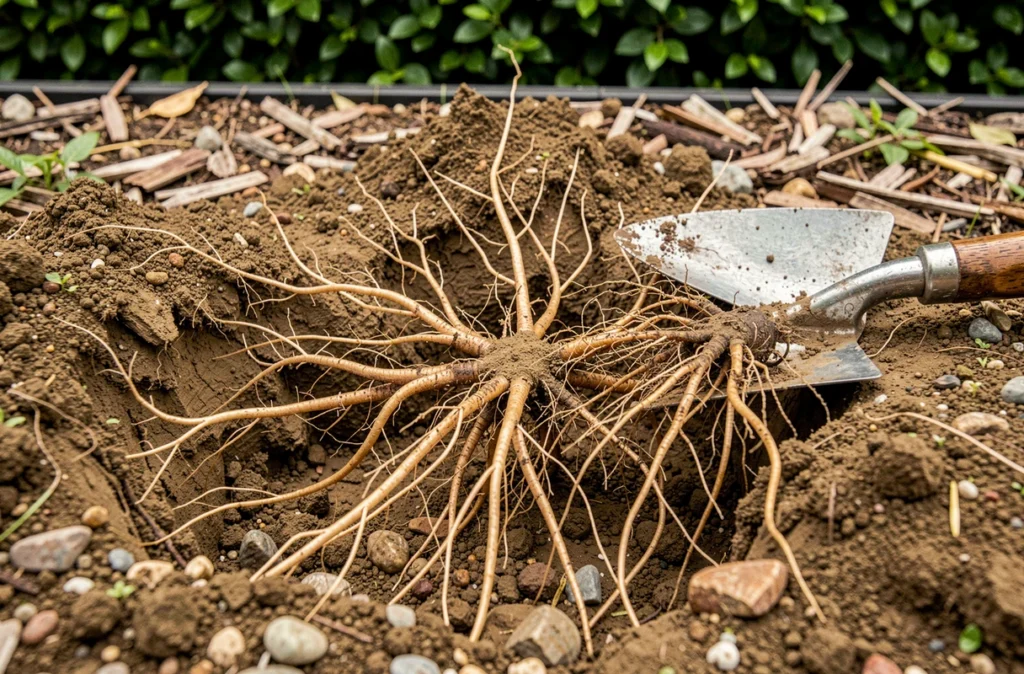
Available sources do not provide a verified maximum root depth for the genus Jasminum. Planting recommendations focus on sizing the hole to fit the purchased root ball, not on reaching a target depth. Trying to find out how deep jasmine roots grow reveals that the answer varies depending on the species, soil texture and the site’s water conditions.
Loose, well-drained soil allows roots to grow down more freely than compacted clay. In a pot, depth is naturally limited by the container: specialist guides recommend a pot at least 30 to 40 cm deep so the root system can develop without excessive restriction.
What matters more than a theoretical depth
Drainage matters more than depth. Jasmine roots do not tolerate prolonged excess moisture. Soil that stays waterlogged around the roots causes them to suffocate, regardless of how deep they grow. Improving soil drainage is the priority when planting, especially in heavy soil or in a damp area at the bottom of the garden.
Soil and drainage: the right conditions for jasmine roots
Whether common or star jasmine, the plant needs moist but never waterlogged soil. This requirement guides every step of preparing the planting hole.
In clay soil, adding a layer of gravel or clay pebbles to the bottom of the hole can help water drain away. Mixing garden soil with mature compost and coarse sand improves the soil structure and gives the roots an airy growing medium.
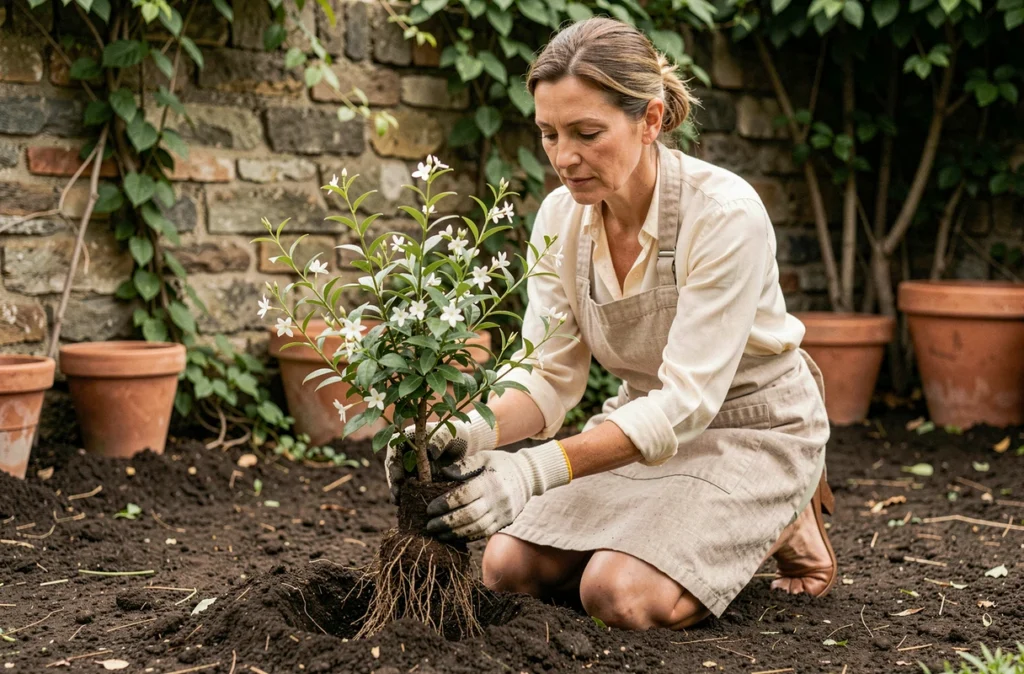
- In the ground: dig a hole twice as wide as the root ball and just as deep, no deeper. The root collar should be level with the soil to prevent rot.
- In a pot: choose a container with drainage holes, add a few centimetres of drainage material, then fill it with a mix of potting compost, compost and perlite or sand.
- On sloping or sandy ground: natural drainage is often sufficient, but the soil dries out quickly in summer. Organic mulch helps retain moisture without waterlogging the roots.
Planting near a wall and access to water
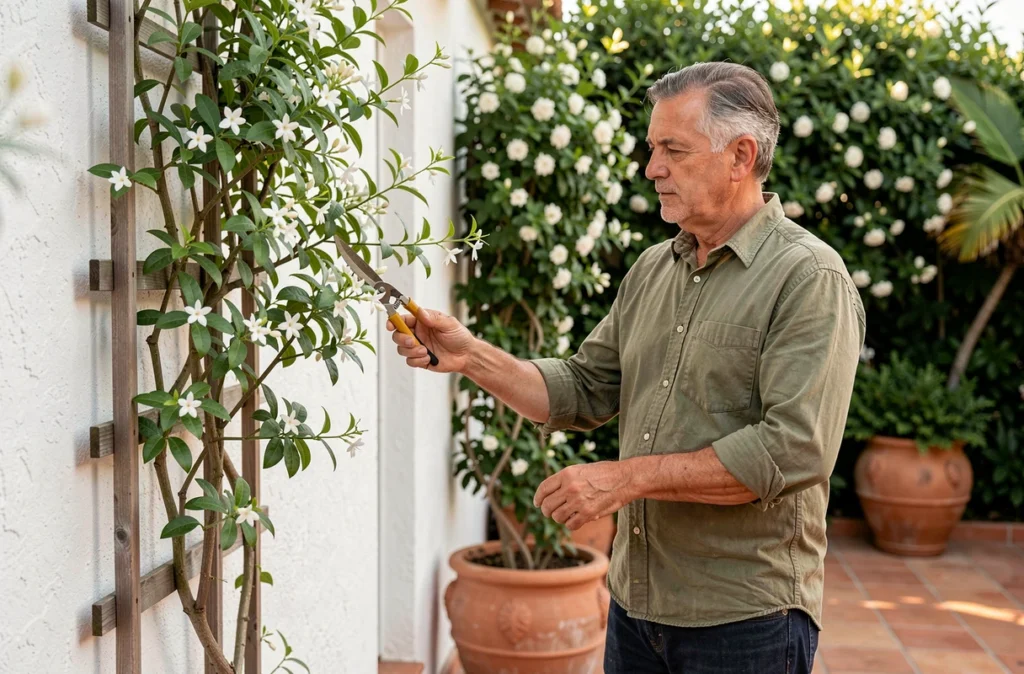
Planting a climbing jasmine against a wall is a garden classic. However, this can create a drier area at the base of the wall, where rainfall does not always reach the soil. Leave at least 20 centimetres between the wall and the root ball, and angle the plant slightly towards its future support.
A jasmine planted too close to a wall may not get enough water at its base, which slows root establishment. Watering will need to make up for this shortfall, especially in the first year.
Planting jasmine in the ground: steps that affect root establishment
Planting time affects how well the roots establish. Spring, after the last frosts, is the most reliable time in most regions of France. In mild climates, planting in autumn gives the roots time to establish before winter.
Prepare the root ball before planting
Soaking the root ball in a bucket of water for about 15 minutes rehydrates the outer roots, which are often dry after transport. This simple step helps the roots make immediate contact with the soil in the planting hole.
If the roots have formed a dense mass at the bottom of the pot, gently tease them apart. Roots that have curled around themselves will keep growing in circles after planting instead of spreading into the surrounding soil.
Planting and initial care
Once the root ball is centred in the hole, backfill with the prepared mix, firming it gently. Finish by watering thoroughly at the base of the plant: this removes air pockets around the roots and ensures even contact between the soil and roots.
A few centimetres of mulch (bark, straw or fallen leaves) reduces evaporation and protects the shallow root zone from temperature fluctuations. Regular watering is still essential during the first year, while the root system spreads enough to draw water from deeper in the soil.
Common jasmine or star jasmine: different roots and hardiness
Common jasmine (Jasminum officinale) is a deciduous plant that is hardy across much of France. Star jasmine (Trachelospermum jasminoides) keeps its evergreen foliage but is less tolerant of prolonged cold.
Check the plant label for its botanical name before applying growing advice for one species to another. If star jasmine is planted in soil that is too cold, its roots will suffer well before frost reaches its above-ground parts.
Their root growth also differs. Star jasmine develops a dense, spreading root system that can extend horizontally beneath the surface. In favourable conditions, common jasmine tends to explore the soil more deeply. These differences affect the choice of container for potted plants and spacing when planting in the ground.
Tailoring planting to the jasmine you actually have, rather than to a generic jasmine, is the most useful precaution. Drainage, planting-hole depth and exposure to cold should be considered for each species, not decided by habit.