
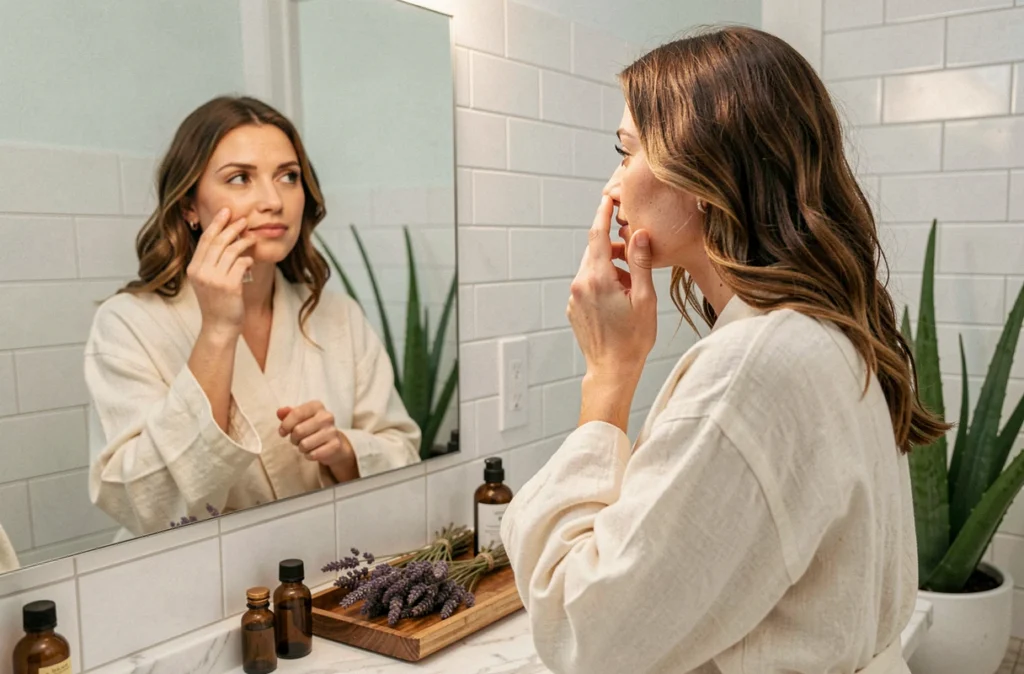
A shower gel labeled “with lavender essential oil” causes a reaction on someone’s arm. Yet the product is certified natural, formulated without synthetic colorants, and sold in an organic store. The problem isn’t the marketing—it’s an allergen found in the plant extract itself. Natural cosmetics offer genuine alternatives to conventional formulas, provided you know how to read what they really contain.
Plant-based allergens in natural cosmetics: what the 2026 European regulation changes
Since August 1, 2026, Regulation (EU) 2023/1545 has required new cosmetic products placed on the European market to list an expanded range of fragrance allergens directly in the ingredients list. Products already on the market have until July 31, 2028, to comply.
This change directly affects so-called natural skincare routines. Essential oils of lavender, geranium, and ylang-ylang contain molecules such as linalool and geraniol, which are among the allergens covered by the regulation. A natural product can contain just as many allergens as a conventional one, simply because these molecules occur naturally in plants.
For sensitive skin, a natural claim is no substitute for reading the INCI list. You can find product ranges formulated with this in mind at naturilys.fr, where ingredients are listed in detail.
In practice, check three things before buying a fragranced skincare product:
- The words “parfum” or “fragrance” in the INCI list, which indicate a scented blend whose allergenic components must now be listed individually
- Molecule names such as limonene, linalool, citronellol, or geraniol, which appear at the end of the list when they exceed a concentration threshold
- The words “sans parfum” or “fragrance free,” which remain the only guarantee that these compounds are entirely absent, including those of plant origin

Face cream, serum, and sun protection: the three natural skincare essentials for a daily routine
Using more products doesn’t make a routine more effective. You’ll get better results from three well-chosen products than from eight half-used bottles.
Face moisturizer
This is the product you apply every morning, and the one whose formula matters most in your daily routine. A natural face cream typically combines a plant-based oil or butter (shea, jojoba, sweet almond) with a moisturizing ingredient such as vegetable glycerin or biotechnologically derived hyaluronic acid.
Choosing a cream with a short INCI list reduces the risk of a reaction and makes it easier to identify active ingredients. With more than fifteen ingredients, a formula often includes emulsifiers or preservatives whose necessity varies by brand.
Concentrated serum
Apply serum to clean skin before moisturizer. Its lightweight texture absorbs quickly. In natural cosmetics, serums containing stabilized vitamin C, niacinamide, or centella asiatica extracts target concerns such as radiance, blemishes, and firmness.
A serum doesn’t replace a moisturizer. It complements it by delivering a higher concentration of active ingredients to address a specific concern. Applying serum to damp skin improves absorption and helps prevent the sticky film some formulas leave on dry skin.
Daily sun protection
Mineral UV filters (zinc oxide, titanium dioxide) are the most common option in natural cosmetics. They work by reflecting UV rays without penetrating the epidermis. The trade-off is texture: mineral formulas can leave a slight white cast, although newer versions made with micronized particles have significantly reduced this effect.
Apply sunscreen as the final step in your skincare routine, after serum and moisturizer, to ensure the filter forms an even layer on the skin’s surface.
Microplastics and natural cosmetics: why a label isn’t enough
It’s easy to assume that a natural product is automatically free of synthetic polymers. The regulatory picture is more nuanced. Regulation REACH (EU) 2023/2055 banned certain exfoliating microbeads in October 2023, but the phase-in period spans several years, depending on the product category.
Rinse-off cosmetics (shower gels, shampoos, scrubs) are subject to a deadline of October 2027. Leave-on products (creams, serums, body lotions) won’t be covered until October 2029. For makeup and products for the lips or nails, restrictions on the microparticles concerned are set for 2035, with labeling requirements starting in 2031.
Checking the INCI list is still more reliable than trusting the word “natural” on the packaging. Terms such as “acrylates copolymer,” “polyethylene,” or “nylon-12” indicate the presence of synthetic polymers, even in a product sold through an organic retailer.
Sensitive skin and natural ingredients: adjust your routine without changing everything
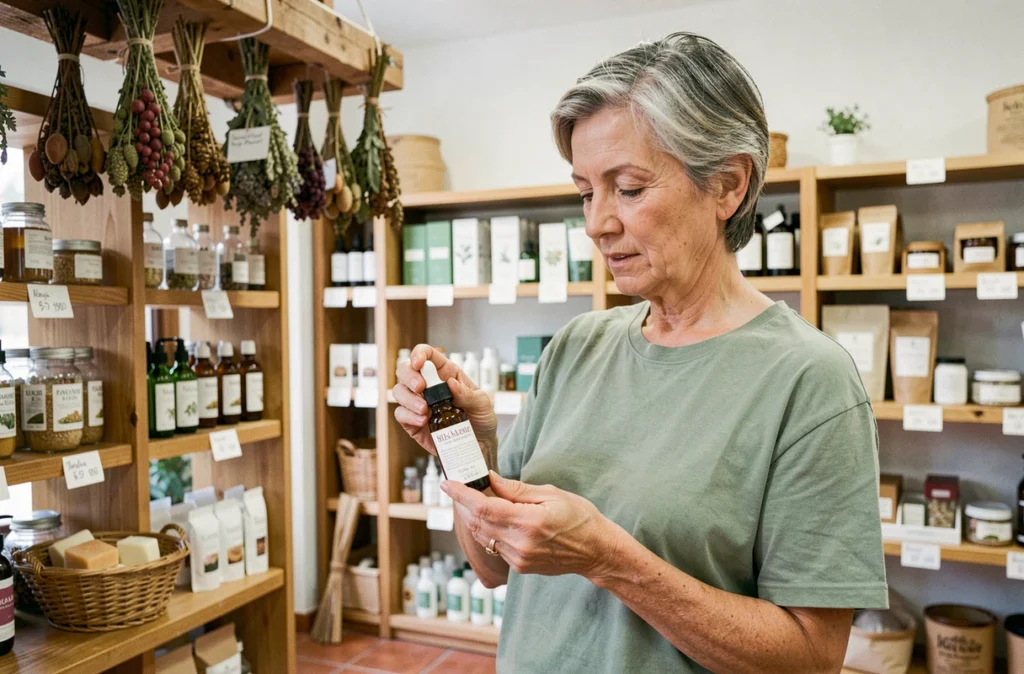
If your skin reacts to a natural cosmetic, it isn’t reacting to “natural” products in general. It’s reacting to a specific ingredient. Identifying it can help you keep a plant-based skincare routine without triggering further irritation.
The simplest approach is to test each new product on a small area (the inside of your wrist or behind your ear) for 48 hours. If you’re sensitive to fragrances, choosing products formulated without essential oils or fragrance is the safest option. The moisturizing and protective active ingredients in natural formulas work independently of scented compounds.
For skin that reacts to preservatives, single-dose packaging or airless containers limit exposure to preservatives because the product isn’t repeatedly exposed to the surrounding air. An airless bottle reduces the need for preservatives while extending the product’s shelf life.
Switching to natural cosmetics doesn’t mean replacing all your products at once. Start with the product you use most often (usually your face cream or cleanser), observe your skin for a few weeks, then move on to the next one. This gradual approach makes it easier to identify a problematic ingredient if a reaction occurs.