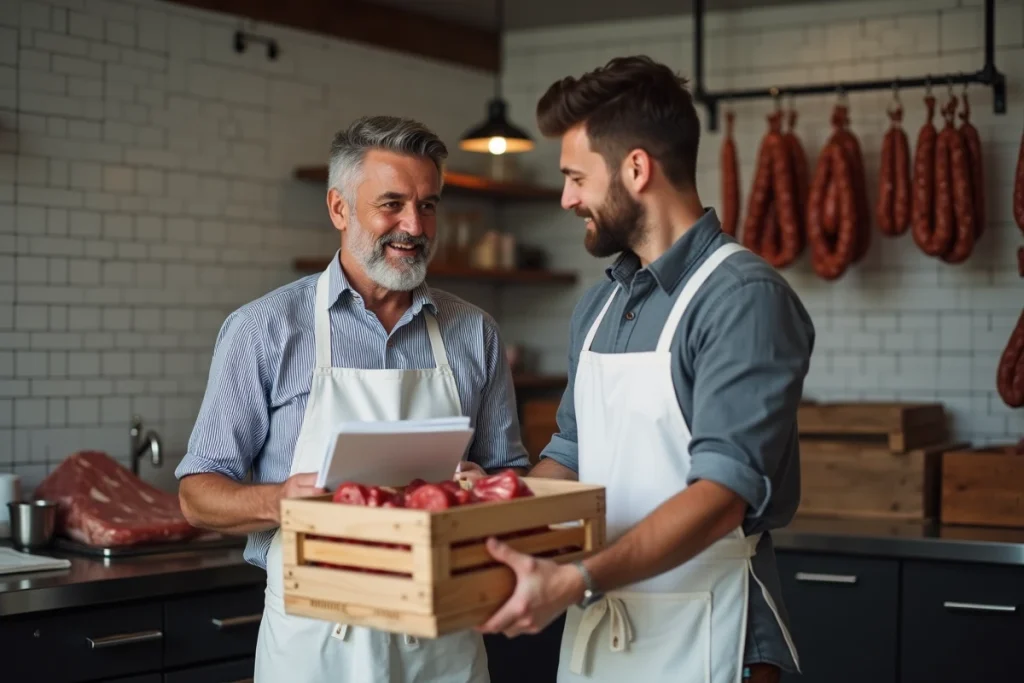
A baker who calls three different suppliers before 6 AM to compare flour prices, a charcutier-caterer who discovers a shortage of natural casings on the day he must deliver 200 covers: in the food industry, supply is not an administrative issue. It is a daily source of stress that eats into production time and compresses margins.
Supply constraints in the food industry: what gets stuck daily
Logistics is rarely discussed when talking about food craftsmanship. The spotlight is on know-how, the quality of the finished product, and customer relations. Supply remains in the shadows, treated as a secondary task.
The problem is that this task consumes a considerable amount of time. A craft butcher or a pastry chef sometimes manages a dozen distinct suppliers, each with different pricing conditions, delivery times, and minimum orders. Each missing reference forces improvisation, contacting a backup wholesaler, or modifying a recipe at the last minute.
The difficulty increases for the smallest structures. Without sufficient purchasing volume, negotiated prices often remain disadvantageous. A sole artisan does not have the same leverage as a fast-food chain when dealing with a raw material distributor.
Players like the Groupe Rouby are precisely structuring their offerings around this reality, bringing together several supply chains so that food professionals can find their references without multiplying interlocutors.

Pooling purchases among artisans: an underutilized lever
For several years, local initiatives have been testing a simple model: consolidating orders from several artisans in the same area to gain more bargaining power with suppliers. In Sologne, the Chamber of Trades and Crafts of Loiret supports projects that integrate collective purchasing structuring, with a goal of measurable local economic benefits.
The principle is not revolutionary, but its application to the food industry remains marginal. While purchasing groups have existed for a long time in large retail or collective catering, independent artisans still predominantly work solo on their orders.
What pooling changes concretely
- A consolidated order volume allows for negotiating prices closer to those of medium-sized structures, without sacrificing the quality of raw materials selected by each artisan.
- Shared logistics reduce the number of deliveries per week for each point of sale, which decreases waiting slots and frees up time in the lab.
- Sharing the same supplier for common references (packaging, consumables, certain basic ingredients) simplifies administrative management, particularly invoicing and stock tracking.
Feedback varies on this point: some artisans fear losing control over their product choices by going through a collective intermediary. The key seems to lie in flexible groups, where each professional retains their specific suppliers for distinctive raw materials (a particular couverture chocolate, a specific breed of meat) while pooling generic purchases.
Digital supply tools for food artisans
There is much talk about artificial intelligence applied to food production. The promises are enticing: demand forecasting, automatic order adjustments, waste reduction. In practice, the reality is more mixed for small structures.
The main barrier remains the collection of usable data. A predictive software needs reliable sales history, real-time stock data, and seasonality indicators. In an artisanal bakery or a catering business, this information rarely exists in structured digital form.
Before aiming for prediction, it would be beneficial to consolidate the basics. A few accessible tools already help streamline the supply chain without requiring heavy investment:
- Online ordering platforms dedicated to food professionals, which centralize catalogs from several wholesalers on a single interface and compare prices in real-time.
- Simple stock management software designed for small teams, which sends an alert when a reference falls below a threshold defined by the artisan.
- Production planning tools that cross-reference the customer order calendar with stock levels to automatically generate a restocking list.
The challenge is not to transform a bakery into a logistics center run by algorithms. It is to eliminate supply tasks that add no value for the artisan: repetitive phone calls, manual price comparisons, late detection of missed orders.
Structured short circuits: beyond marketing discourse
The short circuit has become a powerful commercial argument. Consumers are sensitive to it, and artisans readily claim it. Transforming this intention into a reliable supply chain requires organizational work that many underestimate.
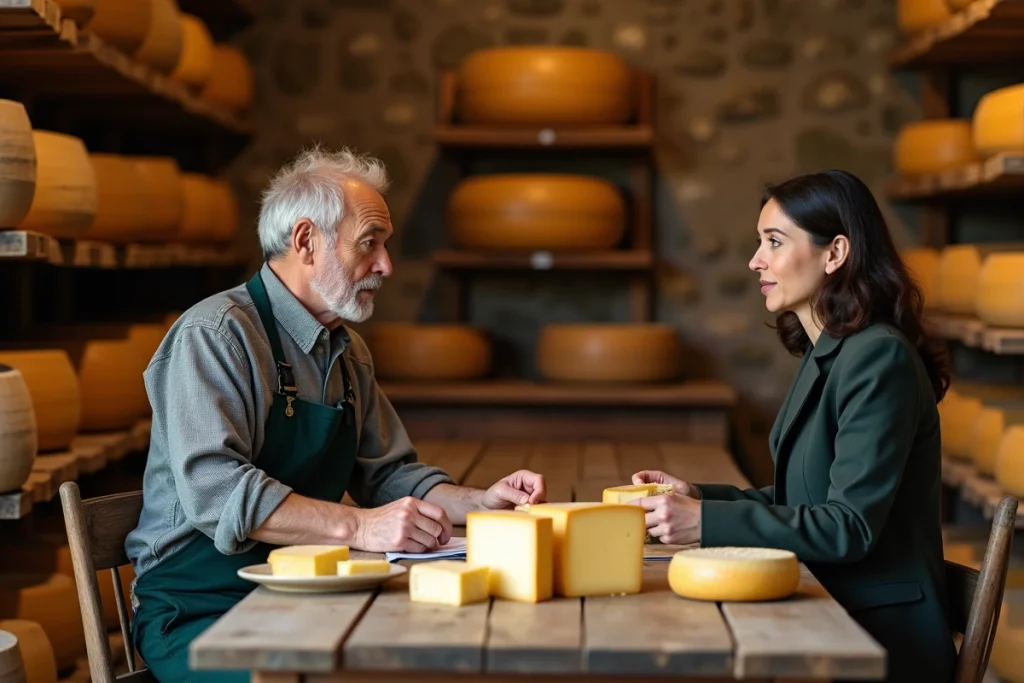
A local farmer supplying a caterer does not deliver with the same regularity as a national wholesaler. Volumes fluctuate with the seasons, sizes vary, and payment terms are not always formalized. Structuring a short circuit requires a minimal contractual framework, even among neighbors.
The most successful local projects involve communities, consular chambers, and artisans around a common goal: to ensure a regular flow of local raw materials under predictable conditions for both parties. Without this structuring, the short circuit remains a fragile promise, dependent on individual goodwill.
Supply in the food industry deserves to be treated as a true strategic position, not as a morning chore. Artisans who invest time in organizing their purchases, whether through pooling, suitable digital tools, or structured local partnerships, recover that time where it matters: in production, facing the customer, and on product creativity.