
Every year, new disciplines capture media attention and provoke an influx of club or gym registrations. Sport remains at the center of health and wellness concerns, but the question that deserves to be asked is not “which sport is trendy,” but rather: which sport will you still be practicing in three years, considering your budget, physical condition, and schedule?
Entry Cost by Sports Discipline: A Comparison for Sustainable Choice
The financial barrier is rarely addressed in trend articles. A pair of running shoes and access to the park do not cost the same as a padel gym membership with court rental.
| Discipline | Starting Equipment | Recurring Cost | Required Supervision |
|---|---|---|---|
| Walking / Running | Low (shoes) | Almost none | Optional |
| Gym Fitness | Low (outfit) | Monthly subscription | Variable by gym |
| Padel | Racket + specific shoes | Court rental per session | Recommended at the beginning |
| Road Cycling | High (bike, helmet, outfit) | Regular maintenance | Not required |
| Swimming | Low (swimsuit, goggles) | Pool entry or subscription | Optional |
This table does not provide precise amounts, as they vary by region and level of practice. However, it shows a structural gap: low entry-cost disciplines favor long-term consistency.
Walking and running remain the most financially accessible activities. In contrast, sports like road cycling require a significant initial investment, which can be discouraging if motivation wanes after a few months.
Platforms like Sport Univers allow for comparing disciplines and refining criteria before committing, which helps avoid unnecessary spending on unsuitable equipment.
Sports Practice Outside of Clubs: A Confirmed Underlying Trend Supported by Data
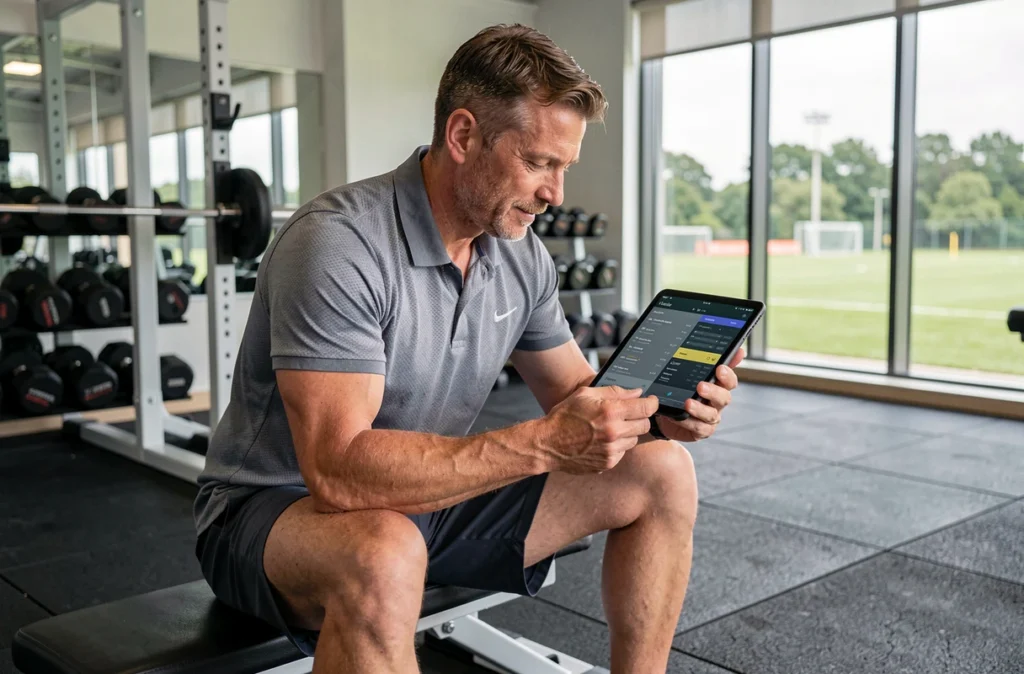
Autonomous sports practice has been progressing for several years in France. Training via apps or video tutorials has gained ground compared to the end of the 2010s. This phenomenon is not just a post-lockdown fad: it reflects a lasting change in habits.
Running alone in the morning, following a fitness program on your phone, walking daily without an associative framework: these practices now represent a significant part of physical activity among the French. They do not involve annual fees or fixed time constraints.
What This Changes for Choosing an Activity
If you are hesitating between several sports, the question of autonomy should be raised from the start. A discipline that requires a partner (padel, team sports) or a specific location (pool, climbing gym) imposes logistical constraints that weigh on consistency.
- Running and walking can be done without an appointment, close to home, any day
- Home fitness only depends on a small space and a screen, with a wide range of free online content
- Racket or team sports offer more social connection but require organization that can become a barrier in a busy schedule
Adapting the choice of sport to your actual lifestyle, not to the one you imagine having, remains the best way to maintain it over time.
Gyms and Supervision: An Underestimated Safety Angle
Fitness gyms have multiplied in recent years, driven by the wellness trend and sporty lifestyle. But not all are equal in terms of safety and compliance.
The DGCCRF conducted inspections of gyms and fitness centers in 2022 and 2023. The result: anomalies were found in a large portion of the establishments inspected. This concerns both contractual conditions and supervision standards.
Points of Caution Before Signing Up for a Gym
Beyond the subscription price and geographical proximity, some concrete criteria can help identify a reliable gym:
- Check that the coaches have recognized diplomas (professional sports educator card displayed)
- Read the contract termination conditions before signing, not after
- Observe the condition of the equipment and the presence of qualified staff during peak hours
- Ensure that the gym clearly displays its prices and general sales conditions
This verification process takes a few minutes. It helps avoid unpleasant situations, such as difficult-to-stop charges or a lack of support for beginners.
Sport-Health and Public Policies: A Framework That Is Taking Shape
Sport-health is no longer a vague concept. Public authorities in France are gradually structuring initiatives to encourage physical activity as a preventive lever. The initiative “September, Move!” illustrates this desire to make sport-health a collective reflex.
Sport prescribed by a doctor for chronic conditions is gaining institutional legitimacy. This movement changes the way one can approach the choice of an activity: it is no longer just about pleasure or performance, but also about measurable benefits on health indicators.
For sedentary individuals or those returning to activity, this approach offers a reassuring framework. A sport chosen in connection with a health goal is more likely to be maintained than a sport chosen on a whim after watching a viral video.
The determining criterion for sustainable sports practice is neither the novelty nor the popularity of a discipline. It is the alignment between the activity, available financial means, initial physical condition, and scheduling constraints. Data on practice outside clubs and inspections in gyms confirm that the practice environment matters as much as the sport itself.