Defining your everyday style means making choices, not accumulating clothes. Today’s fashion trends revolve around a few measurable shifts: the return of materials such as leather and denim, the growing presence of secondhand clothing sold by retailers, and a cost-per-wear calculation that is redefining what counts as a good deal.
Rather than listing seasonal colors, this article compares the practical trade-offs that help you build a cohesive wardrobe.
Cost per wear: the real measure for choosing fashion pieces
The price on a tag says little about a garment’s true value. What matters is the cost per wear: the price divided by the number of times you wear the item. A €120 dress worn 40 times costs €3 per wear, while a trendy €25 top worn twice costs more than €12 per wear.
This way of thinking encourages investment in durable, versatile pieces. A well-made pair of jeans, a leather coat, or understated accessories can last through the seasons without losing their appeal.
| Type of item | Typical purchase price | Estimated wear frequency | Cost per wear |
|---|---|---|---|
| Classic raw denim jeans | Medium to high | High (several times a week) | Very low |
| Timeless midi dress | Medium | Moderate (once or twice a week) | Low |
| Ultra-trendy top | Low | Low (a few times per season) | High |
| Leather coat | High | High (daily in fall and winter) | Low over several years |
This table illustrates a simple principle: the items with the lowest purchase price aren’t necessarily the most economical. Everyday style is built first and foremost on how often you wear your clothes, not on how many items you own.
Trends that last across several seasons, such as denim, leather, and the midi dress, regularly appear in fall-winter and spring-summer collections. Their longevity makes them natural choices for keeping cost per wear low. Items strongly tied to a particular season, on the other hand, quickly lose their place in a functional wardrobe. Those who follow fashion news in Net Addict’s fashion section will regularly find this approach applied to new collections.

Secondhand style: how the professional market is changing the game
Secondhand shopping is no longer limited to peer-to-peer exchanges on apps. Sales of pre-owned clothing by retailers (thrift stores, dedicated in-store sections, and brand corners) are taking up an increasingly large share of the clothing market.
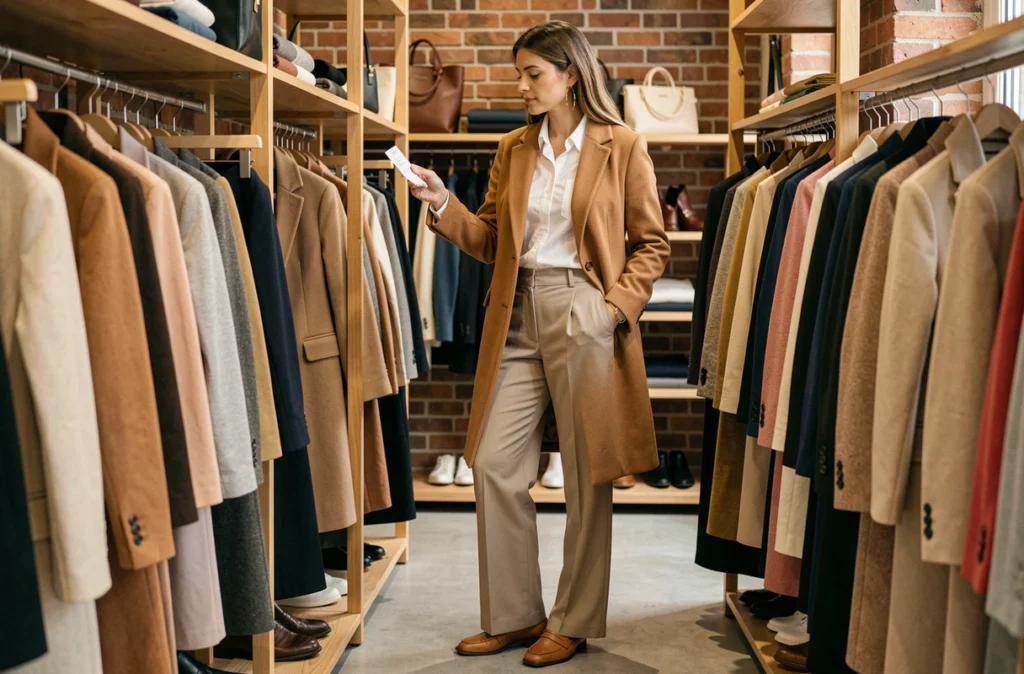
For everyday style, the difference is being able to see and try on items before buying them. A vintage leather jacket found in a thrift store adds a distinctive touch that a new purchase from a mass-market retailer can’t replicate.
Secondhand as a substitute, not an addition
A study by Refashion, reported by Boutique2Mode, offers a clear insight: most shoppers surveyed said their most recent secondhand purchase replaced a new one. Choosing secondhand isn’t about expanding your wardrobe, then, but about refreshing your look without accumulating more clothes.
This finding challenges the idea that secondhand shopping is merely an add-on. When it comes to expressing personal style, where you shop becomes a choice in its own right: hunting down a distinctive piece rather than buying yet another version of a new basic.
- Brick-and-mortar thrift stores let you assess the fit, drape, and fabric—three things that are impossible to judge from a photo
- Secondhand sections at retailers offer quality control that peer-to-peer marketplaces don’t always provide
- Vintage pieces (jeans, leather clothing, and leather accessories) develop a patina over time, adding to their character
Environmental labeling for clothing in France: what it means for consumers
Environmental information on textiles is evolving in France. Labeling schemes are being introduced gradually, with the aim of making a garment’s environmental impact visible at the point of sale.
For consumers looking to build a sustainable style, this regulatory framework adds a new factor to consider. An environmental score on its own doesn’t provide a complete verdict on a garment: it should be weighed alongside the item’s durability, versatility, and likely frequency of wear.
Reading fashion labels beyond the price
Learning to interpret this information makes it easier to distinguish a piece genuinely designed to last from one made with costs cut at every stage. Materials such as full-grain leather, heavyweight raw denim, and virgin wool often perform better in terms of durability than lightweight synthetic blends.
This habit of checking labels aligns with the cost-per-wear approach: a piece with transparent materials and manufacturing inspires greater confidence as a long-term investment. Brands that are open about their practices make it easier to weigh up fashion choices without relying on guesswork.
Building a trendy, functional wardrobe: the trade-offs that matter
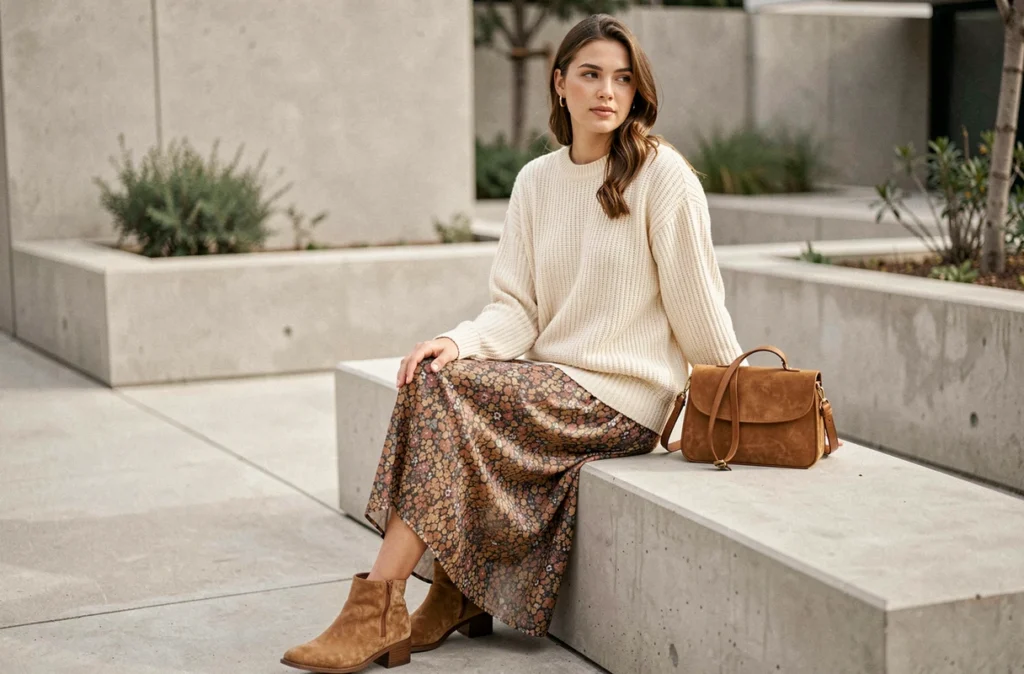
Fall-winter and spring fashion trends confirm a few constants. Denim remains a staple, whether in raw denim jeans or a jacket. Leather, new or vintage, lasts across seasons. A midi dress works just as well for the office as it does for a night out. Neutral colors (chocolate brown, black, beige) dominate wardrobes built to last.
- Choose three or four base colors that work together effortlessly
- Limit highly seasonal fashion accessories to one or two a year
- Check the cost per wear before every purchase to avoid one-use items
- Add one secondhand piece each season for character without overcrowding your wardrobe
Everyday style isn’t measured by the number of items you accumulate. It shows in the coherence of the clothes you wear, their perceived quality, and how often you actually use them. A streamlined wardrobe built around durable, versatile pieces creates more compelling outfits than a closet full of clothes you rarely wear.