
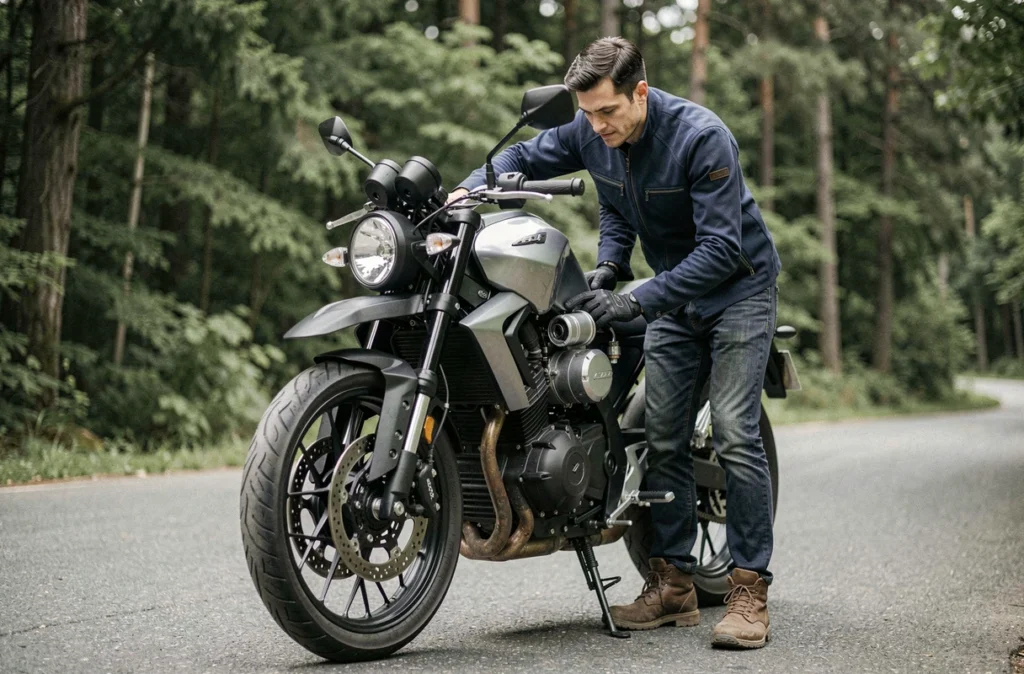
On wet roads, a conventional two-wheeled scooter can lose front-wheel grip without warning. Situations like this often prompt riders to consider vehicles with two front wheels, whose wider front end provides a larger contact area with the road. Choosing a new motorcycle with two front wheels means understanding what this design actually changes about the ride—and what it doesn’t.
Two-front-wheel design: what the term really means
These vehicles have two steering wheels at the front and a driven wheel at the rear. The best-known model in this category is the Piaggio MP3 and its variants. Strictly speaking, these aren’t motorcycles but three-wheeled scooters with a tilting front end.
The vehicle leans thanks to a deformable parallelogram system that links the two front wheels. In a turn, it leans like a conventional two-wheeler, but the larger combined contact area improves stability, particularly on uneven surfaces or road markings.
This distinction matters: you don’t choose this type of vehicle for sportiness, but for the reassuring feel it offers when braking and cornering. It’s a choice for confidence, not performance. To explore the available models, the new motorcycles with two front wheels catalog lets you compare technical specifications before visiting a dealership.
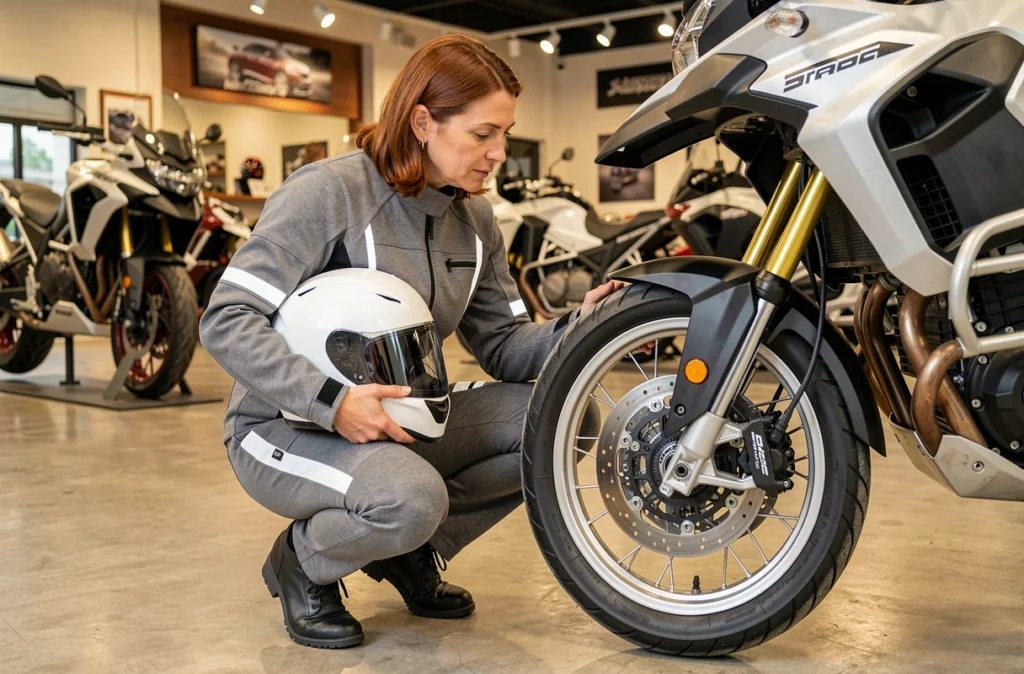
Licence requirements for a new three-wheeler: B or A, depending on engine size
Checking the licence requirements is the first step before comparing models. Some Piaggio MP3 versions can be ridden with a Category B licence, subject to specific conditions. Check the vehicle’s registration document for its homologation category, as this varies according to engine size and power.
In practice, larger-engine versions often require an A or A2 licence, while some mid-range models may be ridden with a Category B licence after additional training. Don’t rely on what the dealership tells you: always ask for the L5e or L2e category of the model you’re considering.
National vehicle category on the registration document: a crucial administrative detail
The registration document lists the vehicle’s national category. A large-engine three-wheeler may be treated administratively as a heavy motorcycle, which affects insurance, licence requirements and the registration certificate fee. Checking the national category before buying helps avoid unpleasant surprises at the prefecture.
Technical features to compare on a new model with two front wheels
Greater front-end stability doesn’t mean you can overlook the basics. When buying a new vehicle, you can compare models using specific criteria that directly affect how they perform in real-world conditions.
- Whether ABS is fitted to all three wheels, not just the rear. ABS prevents wheel lock-up, but it can’t create grip when a tyre has none left, so the system needs to cover the front wheels to be most effective.
- Kerb weight, which affects low-speed handling and parking manoeuvres. Three-wheelers are heavier than conventional scooters with a comparable engine size.
- Seat height and whether you can place both feet flat on the ground when stopped. The wider front end changes how the centre of gravity feels compared with a standard two-wheeler.
- The front-end locking system when stationary (parking brake or parallelogram lock), which lets you park without using the centre stand on some versions.
These four points distinguish a considered purchase from an impulse buy. Everything else—colour, under-seat storage and connectivity—is about comfort, not safety.
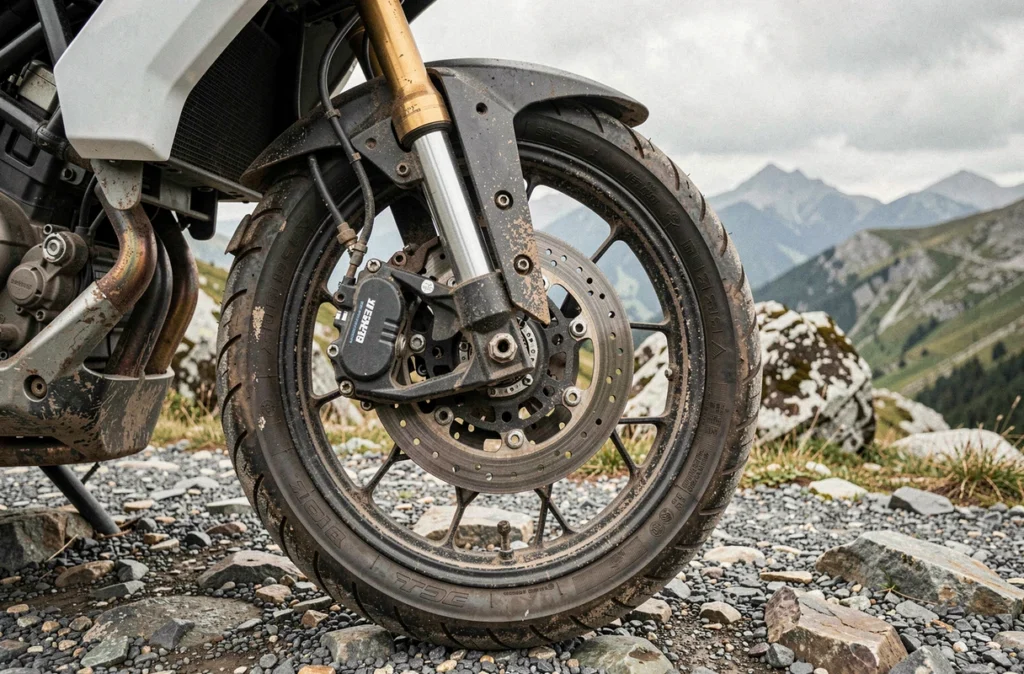
Wet-weather grip: what two front wheels change—and what they don’t
Two front wheels increase the contact area with the road, improving directional stability. On a puddle, pothole or manhole cover, you’re less likely to lose front-wheel grip than on a single-front-wheel vehicle.
The principles of riding in the rain apply to three-wheelers just as much as two-wheelers: cold, dirt, road markings and metal plates are still hazards. Braking progressively and adjusting your speed remain the first rules, whatever the number of wheels.
Tyre pressure: one more value to check
With three tyres instead of two, there are three pressures to monitor. An underinflated front tyre on a three-wheeler can upset the parallelogram’s handling and cause the vehicle to pull to one side when braking. New vehicles are generally delivered by dealerships with the correct pressures, but checking all three pressures every month is a habit worth forming from day one.
Budgeting for a new three-wheeler: costs not to overlook
The list price of a new three-wheeled scooter is considerably higher than that of a two-wheeled scooter with a comparable engine size. The difference reflects the mechanical complexity of the front end (double forks, parallelogram and dual braking system).
Beyond the purchase price, two costs can add up over time:
- Tyre maintenance: you replace three tyres instead of two, and tyres designed specifically for these models aren’t always available from every retailer.
- Insurance, which depends on the national category listed on the registration document. A motor tricycle is not priced in the same way as a conventional scooter.
- Initial manufacturer servicing (the running-in service, followed by scheduled maintenance), which comes around quickly and reflects the more complex front-end mechanics.
Comparing insurance quotes before signing the order form lets you include this cost in your overall budget. A call to two or three insurers with the exact model number is all it takes.
Choosing a new vehicle with two front wheels means accepting higher mechanical costs and an unconventional design in exchange for greater everyday stability. The added confidence is real, as long as it doesn’t turn into overconfidence. Three properly inflated tyres, checked ABS and a speed suited to the conditions remain essential, whatever the number of wheels.