
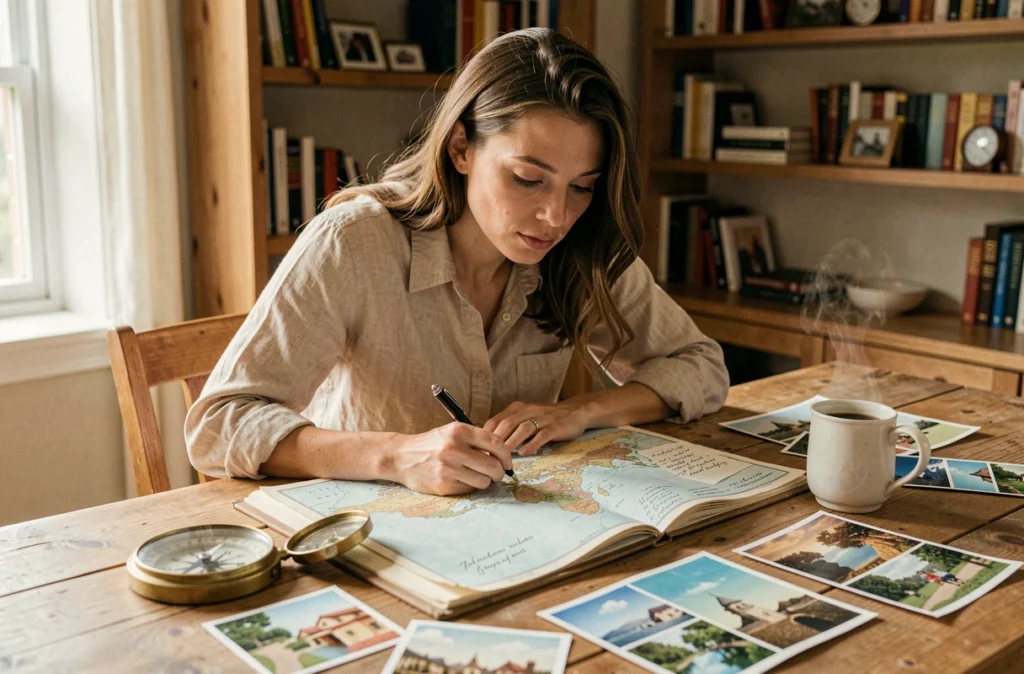
A flight canceled because of a strike, a heatwave that makes sightseeing impossible, a road closed due to a wildfire: situations like these can turn a dream trip into a logistical nightmare. Planning a trip also means anticipating what could go wrong, so your chosen destination remains enjoyable whatever happens.
A destination that can withstand disruptions: the criterion no one mentions
Traditional travel guides suggest choosing a destination based on your budget, the weather, or your interests. These factors matter, but they overlook a decisive one: a destination’s ability to remain accessible and enjoyable when something unexpected happens.
In practical terms, this means choosing a country or region with alternatives. If the beach you planned to visit is inaccessible, there’s another one less than an hour away. If a site closes, the local cultural scene offers other options, so you don’t lose an entire day. Destinations whose appeal is concentrated in a single attraction—a monument, a park, or one particular beach—become vulnerable as soon as that attraction is off-limits.
To assess a destination’s resilience before booking, check official alerts and local authorities’ updates on current disruptions, such as strikes, demonstrations, traffic restrictions, or road closures. This is more useful than comparing average temperatures. Resources like https://www.autourdesvoyages.com/ let you explore a range of destinations and narrow down your options using practical criteria.

Travel requirements and documents: check before you start dreaming
We tend to choose a destination first and check the entry requirements later. Doing it the other way around is more effective. Your passport’s remaining validity can rule out a destination before you even consider the budget.
Requirements vary considerably depending on the traveler’s nationality and destination. Some countries require a passport to be valid for at least six months after your return date, while others require only three months. Checking these conditions while you’re choosing a destination—not just before departure—gives you time to renew a document or obtain a visa without stress.
The European EES system and its practical implications
For travelers it applies to, the new EES (Entry/Exit System) electronically records entries and exits at the borders of the Schengen Area. It replaces manual passport stamping with biometric registration.
The practical impact: border crossings may take longer, especially the first time you use the system. If you have a tight connection or are arriving late, factor this extra time into your schedule.
ETIAS, a separate system, will require certain visa-exempt travelers to obtain prior authorization. The two systems complement each other, but apply to different stages of the journey.
Build an itinerary with breathing room, not a minute-by-minute schedule
An overloaded itinerary falls apart at the slightest delay. We know this, yet we keep cramming in visits for fear of “missing something.” The approach that works in practice is different.
- Limit yourself to two main activities a day, leaving the rest of your time free for spontaneity or relaxation. A day with three transfers and four visits leaves no room for the unexpected.
- For each stop, identify an alternative that doesn’t require a reservation. If your chosen restaurant is full or the museum is closed, knowing where else to go saves frustration and time spent searching on the spot.
- Plan at least one unscheduled day for any trip longer than five days. It’s often the day you remember best, because you get to explore at your own pace instead of rushing around.
A good itinerary is one you can trim without losing the point of the trip. If removing one stop makes the whole schedule fall apart, it’s too rigid.
Travel budget: the costs that can spiral without warning
Everyone compares flight and accommodation prices. The expenses that push a budget off track are elsewhere.
Local transport and admission fees
In some countries, getting around can cost as much as the international flight. A destination that seems inexpensive when you book can become costly if attractions are far apart and there’s no public transport.
Admission fees for tourist attractions add up quickly. In several countries, foreign visitors pay significantly more than local residents. Checking these costs before finalizing your itinerary helps you adjust the number of visits to fit your actual budget.
Insurance and healthcare
Even a routine medical appointment abroad can be very expensive without the right coverage. Premium credit cards sometimes include travel insurance, but coverage limits and exclusions vary. Reading the terms before you leave takes twenty minutes and could save you a bill of several hundred euros.
- Check whether your credit card covers medical evacuation and trip cancellations, not just lost luggage
- Check which vaccinations are recommended or required for your destination; some need to be given several weeks in advance
- Carry digital copies of your insurance documents and any current prescriptions, accessible offline
Choose a vacation destination that suits who you really are
A common trap is choosing a destination for the image it projects rather than what you’ll actually do there. A city known for its nightlife is no use if you go to bed at 10 p.m. A high-altitude trek can become a nightmare if you haven’t walked regularly in months.
Starting with your everyday habits is a more reliable filter than magazine rankings. Someone who reads for three hours a day on vacation doesn’t need a packed schedule of activities. Someone who gets bored without stimulation needs a city, not a remote island.
Climate also plays an underestimated role: humid heat is more tiring than dry heat, and enduring 35 degrees by a pool is nothing like walking around a medina in 35-degree heat. Heat tolerance varies from person to person, and it has a greater impact on how much you enjoy a trip than the beauty of the scenery.
A successful trip isn’t one that ticks the most boxes on a list of attractions. It’s one where each day reflects what you enjoy doing, in conditions you can handle, with enough breathing room to turn unexpected events into stories rather than problems.