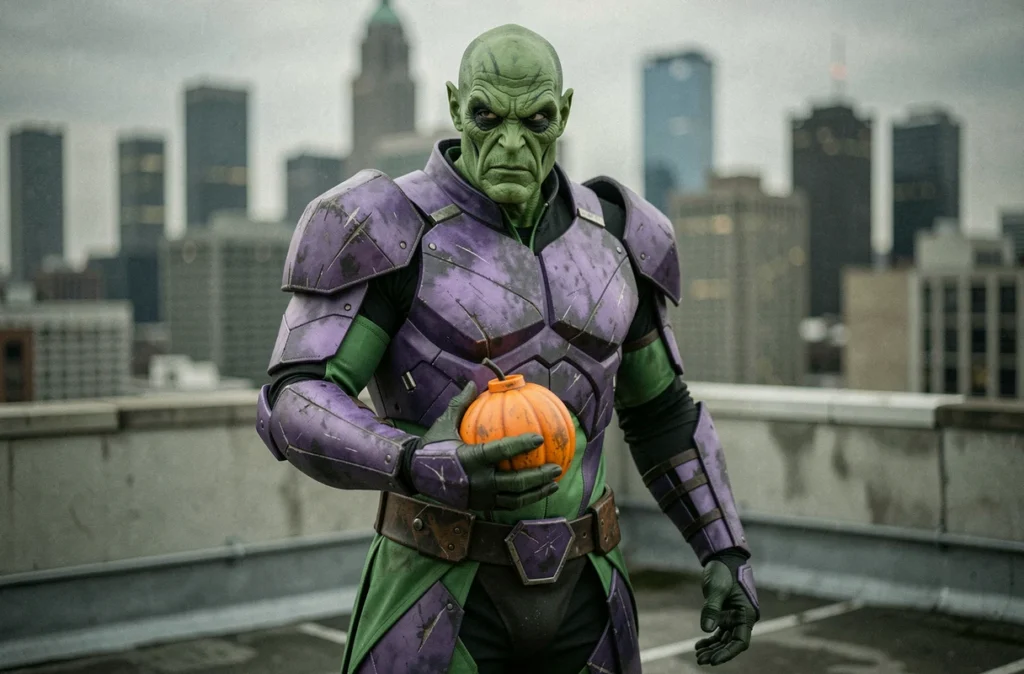
The Green Goblin is more than a recurring antagonist. Norman Osborn, who first appeared in Amazing Spider-Man #14 in July 1964, was created by Stan Lee and Steve Ditko as an adversary whose threat came not from brute strength or cosmic power, but from his social and emotional closeness to Peter Parker. Six decades later, this narrative foundation remains central to any new interpretation of the character.
The Goblin serum and Norman Osborn’s psychological fracture
Norman Osborn’s transformation into the Green Goblin stems from exposure to the Goblin serum, an experimental formula designed to enhance physical and intellectual abilities. The serum works, but causes irreversible mental instability. This is no minor detail: it lies at the heart of the character’s enduring duality.
Norman retains his scientific genius, considerable fortune, and high social standing. The serum does not create a monster in the classic sense. It unleashes a cruelty that was already lurking beneath the surface and gives him the physical means to act on it. Superhuman strength, agility, and reflexes combine with a themed arsenal—pumpkin bombs, a rocket-powered glider, and boomerangs—to create an enemy who is as methodical as he is unpredictable.
Here we have an antagonist whose madness never cancels out his strategic thinking, setting him apart from most Marvel villains. Osborn plans and manipulates, then erupts into erratic violence before reverting to the respectable industrialist no one suspects.
To explore the history of the Green Goblin and his place in Marvel continuity, it’s worth taking a close look at his earliest appearances by Lee and Ditko.
Gwen Stacy’s death: the Green Goblin as a turning point in Spider-Man comics
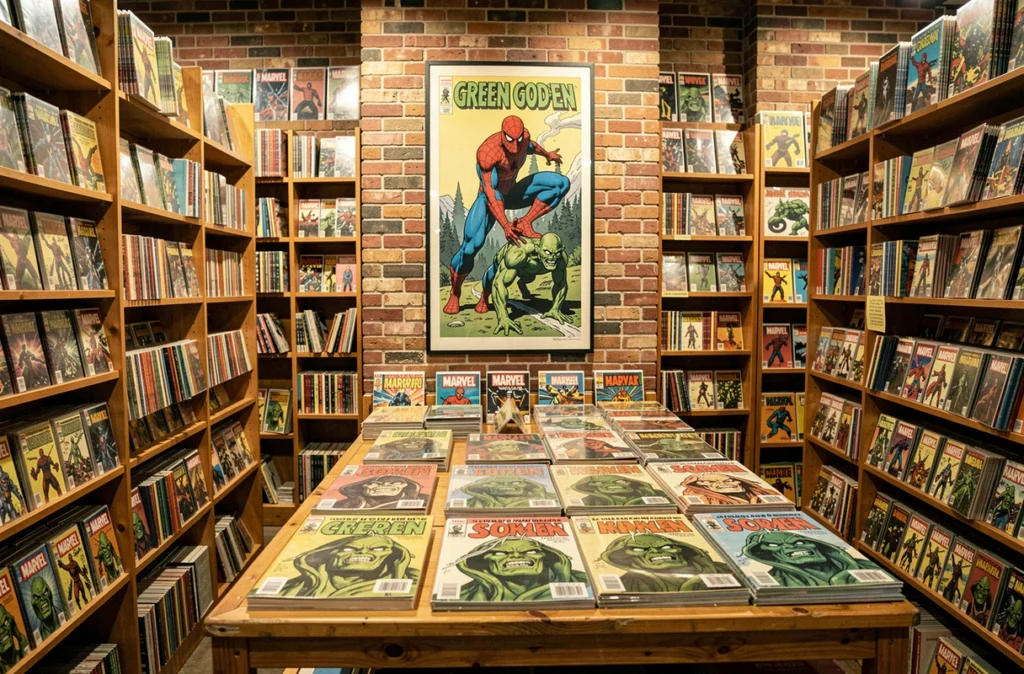
The Green Goblin’s most defining story remains the murder of Gwen Stacy in Amazing Spider-Man #121-122. This event did more than change Peter Parker’s path. It redefined what a mainstream comic book could tell.
The Green Goblin hurls Gwen from the top of the George Washington Bridge. Spider-Man tries to save her with his web, but the sudden stop snaps Gwen’s neck. The hero fails to protect the person he loves most, and the story doesn’t undo what happened. No resurrection, no reset. This permanent death set a milestone for the entire American comics industry.
Norman Osborn also dies in this story, impaled by his own glider. This symmetrical ending could have closed the chapter, but what followed proved otherwise: the Green Goblin mask passed to other wearers, and Norman eventually returned to Marvel continuity years later.
The four Green Goblins and the legacy of the costume
The title of Green Goblin does not belong to just one man. Four characters have worn the costume in the comics, each bringing a distinct dynamic:
- Norman Osborn, the original Goblin, whose rivalry with Spider-Man is as personal as it is ideological. His civilian identity remained secret for years, forming a central mystery in the early story arcs.
- Harry Osborn, Norman’s son and Peter Parker’s best friend. His taking up the costume makes the conflict deeply personal, rooted in betrayed friendship and a toxic family legacy.
- Bart Hamilton, Harry’s psychiatrist, who assumes the Green Goblin identity. A lesser-known wearer, but one who illustrates how this mask can spread from one person to another.
- Phil Urich, who embodies a more recent and violent version, removed from the Osborn lineage and operating in a different vein.
This passing of the mantle is more than a simple plot device. It makes the Green Goblin a symbol rather than an individual: the costume corrupts every wearer, whatever their moral starting point.
Norman Osborn between redemption and relapse in recent Marvel comics
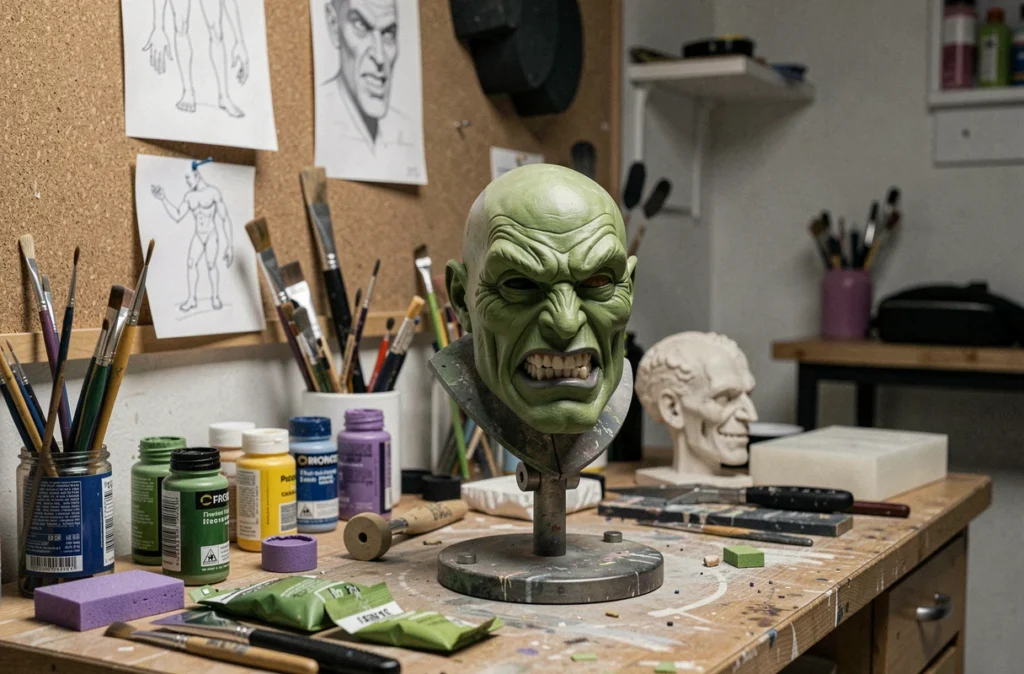
Recent stories have taken a turn that general-interest articles rarely mention. Norman Osborn was stripped of the malice that defined him, consumed by guilt, and became an ally to Peter Parker. He even took on heroic identities such as Gold Goblin and, in some story arcs, Spider-Man himself.
The 2024 miniseries Spider-Man: Shadow of the Green Goblin, written by J. M. DeMatteis and illustrated by Michael Sta. Maria, explores an encounter that predates the Green Goblin’s first appearance. It develops the mystery of the Proto-Goblin and his ties to the Osborn family, adding another layer of complexity to a character many still reduce to his green mask and pumpkin bombs.
This portrayal raises a question Marvel writers have yet to settle: can a character defined by madness exist narratively without it? The tension between redemption and relapse drives current story arcs, but it also changes the dynamic with Spider-Man. The conflict shifts from physical to moral.
Green Goblin screen adaptations: beyond Willem Dafoe
Willem Dafoe played Norman Osborn in Sam Raimi’s Spider-Man in 2002, then returned in Spider-Man: No Way Home. His performance cemented a particular image of the character in popular culture, but adaptations are not limited to this portrayal.
The animated series Your Friendly Neighborhood Spider-Man, which launched in 2025, reverses the usual dynamic between Norman and Peter. Osborn appears as Peter Parker’s mentor in a separate continuity, before the Green Goblin ever appears. This reversal builds empathy first, making his turn toward villainy all the more shocking.
Dafoe himself has expressed interest in returning for future Spider-Man films, leaving open the possibility of another live-action take on the character. The Green Goblin remains one of the few Marvel antagonists whose every adaptation reshapes his relationship with the hero rather than simply repeating a physical confrontation.
The Green Goblin’s narrative longevity rests on a simple principle: he attacks Peter Parker where no web can protect him—in his emotional bonds, his friendships, and his guilt. As long as Spider-Man remains a character rooted in everyday life, Norman Osborn and his successors will remain his most effective mirror.